How might we shape Austria’s tourism ecosystem so travelers experience connected journeys and providers grow stronger together?
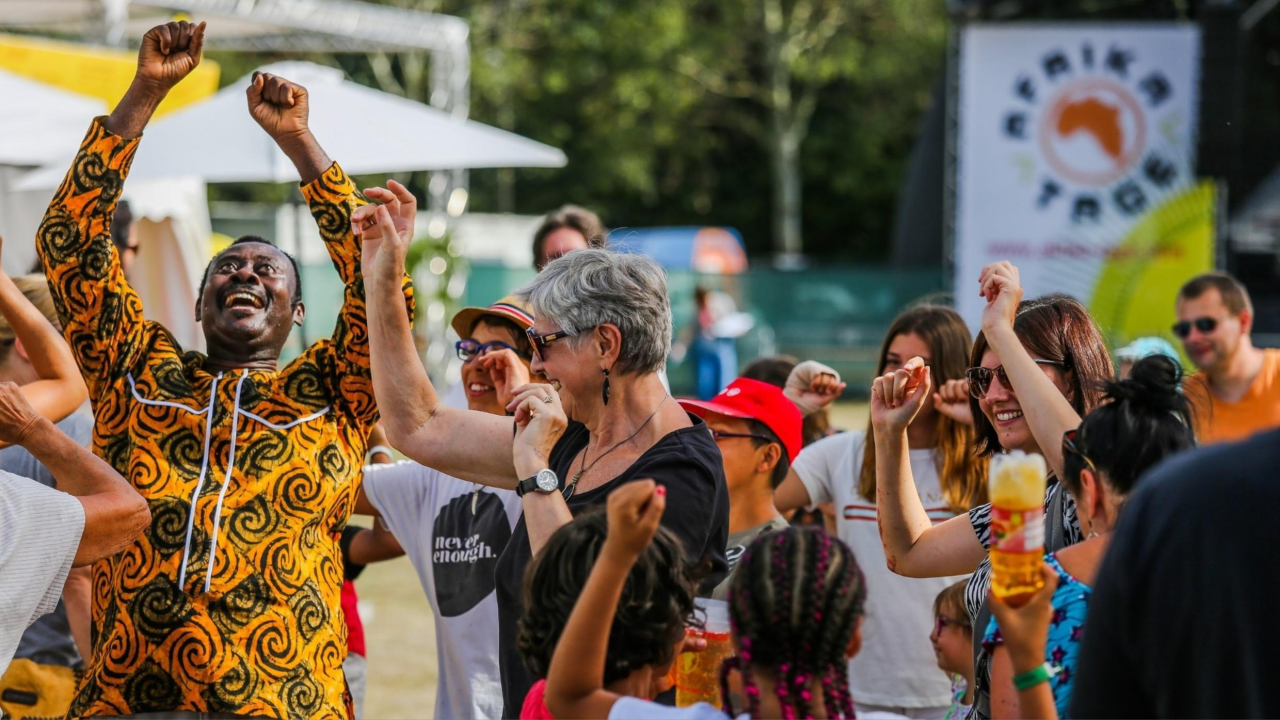
Our vision of a connected journey
A guest arrives in Austria, and her ticket, her preferences, her interests, and her first welcome are already there waiting for her. Every moment fits, every transition disappears, and she is free to actually be on holiday.
This is what the promise of Urlaub in Österreich feels like at its best — inspiration, ease, and being well looked after. A connected journey is what makes that promise hold across every step of the trip: providers and places working together so the guest experiences one continuous trip, not a sequence of isolated transactions.
Today, guests in Austria experience many great moments — and the friction of stitching them together. The building blocks are already there: inspiring content, transport, accommodation, guest cards, activities. What’s missing is the connective layer between them — a way for context, identity, preferences, and trust to travel with the guest from one provider to the next.
About Österreich Werbung
Österreich Werbung (Austria Tourism) is Austria’s national tourism organization. For more than 70 years we have been inspiring people around the world to choose Austria as their holiday destination. With 19 market offices abroad and a team of 220, we carry the Lebensgefühl Österreich — the Austrian way of life — into the world, and bring international perspectives back to Austria’s tourism industry.
Our role is to give the brand Urlaub in Österreich shape and reach. But a brand promise only holds if every host and every touchpoint along the guest journey delivers on it. Inspiration, booking, arrival, on-site experience, and what happens after the trip — each one is a moment where the promise is either fulfilled or quietly broken. That is why digital transformation, innovation, and sustainability are central to our work today: not as separate themes, but as the conditions under which Austria’s tourism ecosystem can keep its promise to guests in a fast-changing world.
This challenge is part of that work. We invite you to help us imagine — and prototype — what a connected journey through Austria can look like when its many providers act as one.
The problem to solve
The guest experience: a journey that breaks at every seam
A guest planning a trip to Austria today moves through digital experiences that should feel like one journey but don’t.
– Inspiration and information. Every question — how to get there without a car, what’s nearby, whether the hotel is genuinely sustainable — sends the guest to a different site with different logic. By the time the answers arrive, the inspiration has cooled.
– Booking. Train, hotel, ski pass, museum: visible, but not bookable in one place. Each provider asks the same questions and runs its own checkout. Many guests give up and book a packaged alternative they didn’t really want.
– Pre-arrival. Once booked, the guest disappears from view. There is no pre-arrival profile, no way to share mobility needs, dietary preferences, or arrival times in advance. The trip to Austria — the scenic route, the stops along the way, the first hours that could already be part of the holiday — stays invisible because no one knows the guest is on the way.
– Arrival and check-in. Confirmations scatter across apps, emails, and PDFs. Multimodal arrivals exist but are not sold as one journey. On arrival, the guest fills out the Meldezettel by hand, hands over an ID already verified at booking, and waits for a guest card that could have been active hours ago.
– On-site. Preferences shared at booking never reach the activity provider. Recommendations feel generic; spontaneous decisions are punished by closed counters and required phone calls. The guest keeps re-introducing themselves to people who could already have known.
– After the trip. No one asks what mattered. Feedback drifts to global platforms instead of the providers who created the experience. Next year, the guest’s profile lives with the platform, not with Austria — and it’s easier to book somewhere else.
Every transition is a small effort tax — and over a full trip, those taxes add up to a quietly worse holiday than Austria has actually delivered.
The industry reality: a connected promise on a fragmented infrastructure
The friction guests feel is not a failure of any single provider. Austria’s tourism ecosystem is made up of thousands of excellent operators — destinations, transport providers, accommodations, activity providers, guest-card schemes — running PMS, OTA, DMO, transport, and Meldewesen systems that don’t talk to each other.
– Inspiration and information. Inspiring content sits in one organization’s domain; the operational data that could turn curiosity into commitment sits in many others, formatted differently and rarely linked back.
– Booking. No shared infrastructure, no common guest ID, no way to pass identification, payment, and consent across handovers. Every extra click is a conversion lost — usually to an international platform that has built the connecting layer.
– Pre-arrival. Booking data sits isolated in the provider’s PMS. No pre-arrival profile reaches transport, accommodation, or destination together — so no one can prepare, anticipate, or upgrade the experience before the guest arrives.
– Arrival and check-in. Multimodal travel exists as products but cannot be sold as one journey. Meldedaten are collected manually although the same data was already verified at booking. Guest cards, mobility offers, and accommodation systems remain unsynchronized; benefits activate too late.
– On-site. The context guests already shared upstream — interests, group composition, preferences — never reaches the colleagues who could act on it. Personalisation stops at every system boundary, and AI-driven recommendations have no ecosystem context to draw on.
– After the trip. Feedback flows to platforms instead of providers. Data sovereignty sits with whoever captured it last, rarely with the guest. The structured feedback that could feed back into next year’s planning never reaches the destinations that need it — and the next booking is lost before it begins.
Every gap between providers is a place where guests churn, margin leaks, and the trust and data that should anchor Austria’s tourism ecosystem flows elsewhere. The opportunity is not to build another portal on top — it is to design the connective layer that lets Austria’s existing ecosystem behave like one trusted travel companion.

The challenge: Design the connective layer
Help us imagine — and prototype — what the connective layer between Austria’s tourism providers can look like. We are open to the form your solution takes: a service, a digital product, a shared infrastructure component, a new business model, a governance approach — or a combination. What matters is that it makes the journey feel whole for guests and lets providers contribute their part to a stronger ecosystem.
How might we shape Austria’s tourism ecosystem so travelers experience connected journeys and providers grow stronger together?
Don’t pitch us a vision. Pick one moment in the guest journey where something breaks today, and prototype the version where it doesn’t. The smaller and sharper the moment, the stronger the case for the connected layer behind it.
Useful angles to explore — pick one or combine several:
– Context that travels with the guest. What if preferences, identity, and consent moved with the guest across providers — under the guest’s control — and no one ever had to introduce themselves twice?
– Arrival as part of the holiday. Imagine the journey to Austria — the scenic route, the stops along the way, the first hours on site — as the most magical part of the trip rather than logistics to get through. What becomes possible when arrival is connected?
– Recommendations with real context. How can providers and AI systems give guests recommendations that draw on the ecosystem’s collective knowledge while respecting data sovereignty?
– Feedback that flows home. How can the joy, the friction, and the small discoveries of every trip reach the destinations and providers who created them — not only the platforms in between?
– Regulation as opportunity. What if EUDI, GDPR, data sovereignty, and digital registration were not compliance burdens but the trigger for a new way of collaborating across providers?
– Less admin, more holiday. Imagine identification, registration, payment, and preferences all handled before arrival. What does the guest’s first hour in Austria look like then?
What promising solutions show
– A clear answer to what gets connected, between whom, and how — not just what gets built.
– An ecosystem mindset, not a platform mindset. Your idea coordinates between providers; it does not replace them or sit above them.
– Reimagined flows, not patched ones. Don’t optimize the current process. Ask what it would look like if designed from the guest’s perspective today, then show the gap.
– Named partners and concrete benefits. Who in Austria’s tourism ecosystem would adopt this, in what order, and what do they gain that they cannot gain alone?
– A serious take on trust, consent, and data sovereignty — not afterthoughts, but design constraints from day one.
– A concrete use case that illustrates the idea — one guest, one moment, one transition — so we can feel what’s different.
What we are not looking for
– A centralized platform that captures the guest relationship for a single actor and asks providers to feed it.
– Pure technology demos without an answer to who adopts, who pays, who benefits, and who governs.
– Optimizations of existing processes without questioning whether the process should exist as it does.
Work like an ecosystem
A connected journey is built by many actors who cooperate without becoming the same actor. Work the same way during the InnoDays. Other teams are tackling adjacent questions — mobility, identity and payment, accommodation, AI in tourism. Their findings will overlap with yours in ways no single team can anticipate. Practices that will make your work stronger:
– Send a listener. Have one team member sit in on the progress updates across challenges and bring back what’s relevant.
– Capture and integrate. Keep a short running document of insights from other teams — pain points, solution shapes, partner constraints — and decide together how to fold them in.
– Talk to all challenge partners, not just yours. A 15-minute conversation with another partner often reveals what your own partner takes for granted.
The strongest solutions will visibly draw on what the rest of the room learned — because that is what a connected ecosystem looks like in practice.
Prize
Two things — one to celebrate the win, one to take your idea forward. Join one of Österreich Werbung’s events as our guests, and present your concept to the Change Tourism Austria community — the innovation, sustainability, digitalisation, and data network behind Austrian tourism. We’ll help you set up the right conversations.