

Felt from Textile Waste
Circular Jacket Challenge · Challenge partner: Davide Balda / FILSE (IT)
How might we turn an artisanal process for making felt from textile waste into a scalable industrial system — and a viable business?
The material works. It is made by hand, in a studio, with a small machine. What does not exist yet is the path from studio to factory.
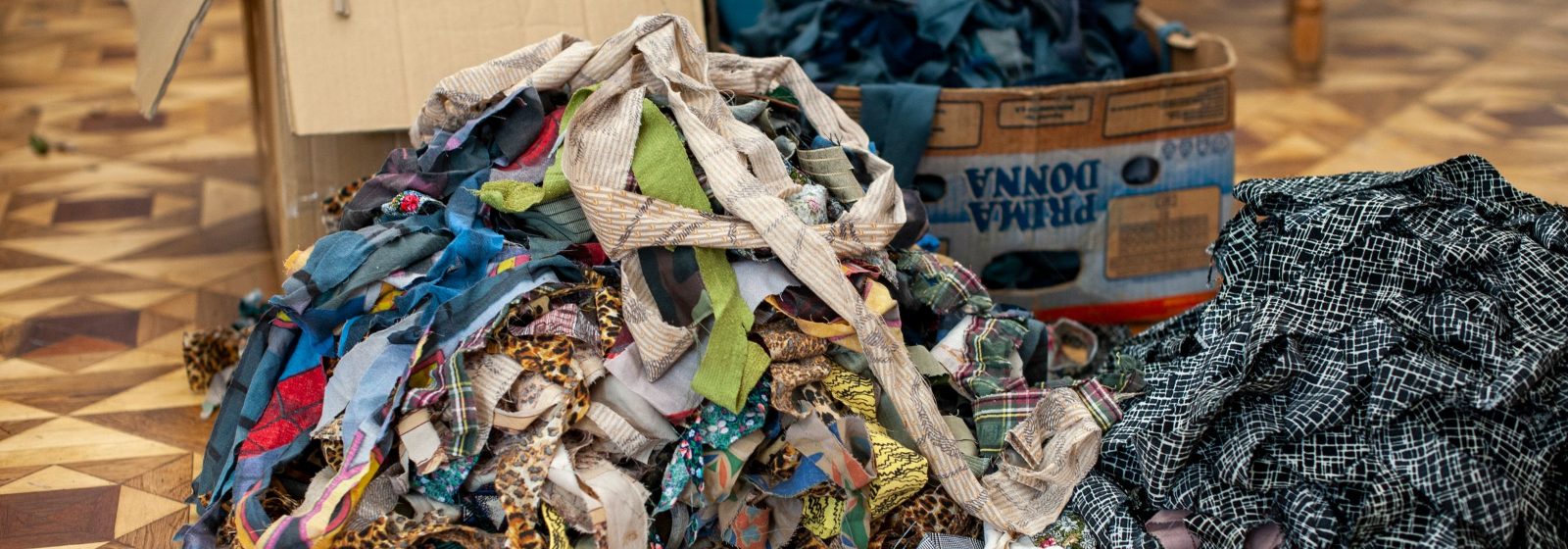
From waste to material
Davide Balda is a material designer based in Liguria, working under the name Archeomaterico. He has developed a felting process that turns textile scraps, offcuts and end-of-life garments into a versatile material using water, soap and mechanical action. Unlike conventional felting, his method handles the fibres the industry rejects — cotton, polyester, elastane and mixed blends alongside wool — and the felt can be re-felted at end of life.
The material has been used in alpine clothing (an underjacket developed for ASTER), agriculture (a fibre substrate tested with Politecnico di Milano), construction insulation, interior design (Milano Design Week 2025) and industrial composites (produced at scale with Chroma Composites). Davide is building Telare la Materia, a startup for textile waste regeneration, and takes part in the sprint through FILSE, the regional development agency of Liguria.
The problem: textile waste has nowhere useful to go
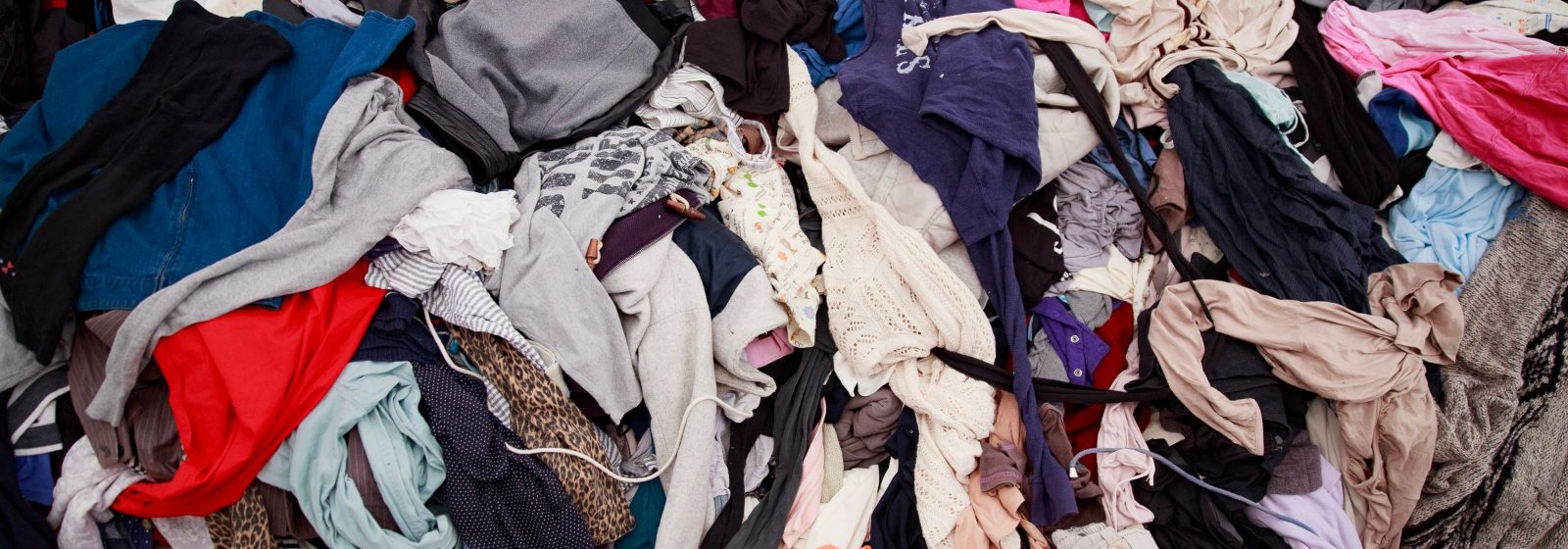
Two EU rules have changed what has to happen to textile waste. Since January 2025 separate collection has been mandatory across the Union. And since 19 July 2026, Regulation (EU) 2024/1781 prohibits large companies from destroying unsold or returned clothing, footwear and accessories — destruction is permitted only in narrowly defined, documented cases. Medium-sized companies follow in 2030.
Collection without reuse only moves the problem: waste still goes to landfill, incineration, or out of Europe. What is missing is a scalable way to turn it into something valuable at the point of production. The ban took effect in July and will be four months old when this sprint runs — brands are in their first compliance season, and they need destinations.
The opportunity: it works, but not at scale
Depending on the input, the felt absorbs water vapour up to a third of its own weight without feeling wet, thermoregulates against cold and heat, and can be treated with lanolin for water resistance. In principle it can be produced industrially with needle-punching and thermal bonding. In practice the process is entirely artisanal: Davide works in his own studio with a small machine, felting by hand and assembling with a sewing machine.
Why this is hard: you cannot choose the colour
The colour of the finished felt depends entirely on which waste fibres went into it. It cannot be selected, matched or repeated. For design objects and limited collections that is a signature — every piece visibly tells the story of its origin. For industrial buyers it is a serious obstacle: no seasonal colourways, no brand palette, no consistency between batches.
Any path to industrial production has to answer this: sort the input to control the output, work with a limited palette that mixed waste can reliably produce, or find buyers for whom variability is the point. The new stream of unsold stock may change the maths — garments a brand may no longer destroy arrive sorted, in batches, often in one colourway and a known composition. Whether that is the route to a controllable palette is an open question.
What we are looking for
Davide’s own assessment is that scaling needs three things: machinery to turn raw textile waste into usable fibre at industrial speed, a line that produces felt from that fibre at a commercially viable rate, and an assembly line to turn felt into finished goods. Teams are welcome to question that sequence — whether all three need to be owned, or whether existing nonwoven capacity could carry part of it, is exactly the kind of question worth attacking.
The jacket is one application among many; the felt and the process are the product. We are looking for concrete, feasible proposals — a production roadmap, a partnership model, a cost comparison, a market entry strategy. Not slide decks with abstract principles.
Find your angle
|
From studio to small series Which existing machinery, manufacturing partners or research facilities — particularly in Italy — could carry the step from handmade to small-series production, and what would that cost? |
Is the industrial version still the same material? Wet felting with soap and water behaves differently from needle-punching or thermal bonding. Does the industrial route keep the moisture behaviour, the thermoregulation and the ability to bond mixed synthetics — or does something get lost on the way to volume? |
|
Which market pays first? The jacket is the ASTER showcase, but the material has been proven in agriculture, construction, interior design and composites. How should the portfolio be sequenced, and which of these buyers can live with unpredictable colour? |
From contacts to a supply chain Conversations are already running with textile manufacturers supplying raw waste, digital platforms matching supply and demand, and an industrial nonwoven producer. What is still missing to turn these into a working system — and how do you position a material made from waste as desirable rather than second-best? |
The prize
{{TBD: Prize noch mit Davide Balda / FILSE zu bestätigen}}
Part of the Circular Jacket Challenge, 26–27 November 2026 — a two-day Innovation Sprint under the Interreg Alpine Space project ASTER, powered by InnoDays.