

Rent & Ride
Circular Jacket Challenge · Challenge partners: Tirol Werbung · REGIO3 · TVB Kitzbüheler Alpen St. Johann in Tirol · Sport Patrick
How might we make renting gear more attractive than bringing your own?
A ski weekend starts with a full car. Skis, boots, helmet, jacket, trousers: for most guests, bringing their own gear is the default, and the car comes with it, because nothing else has room for all of it.
Renting on site should change that. Today it rarely does: for the guest who owns nothing, the rental offer is hard to find, harder to trust and easy to give up on. Here is what that looks like for one of them.
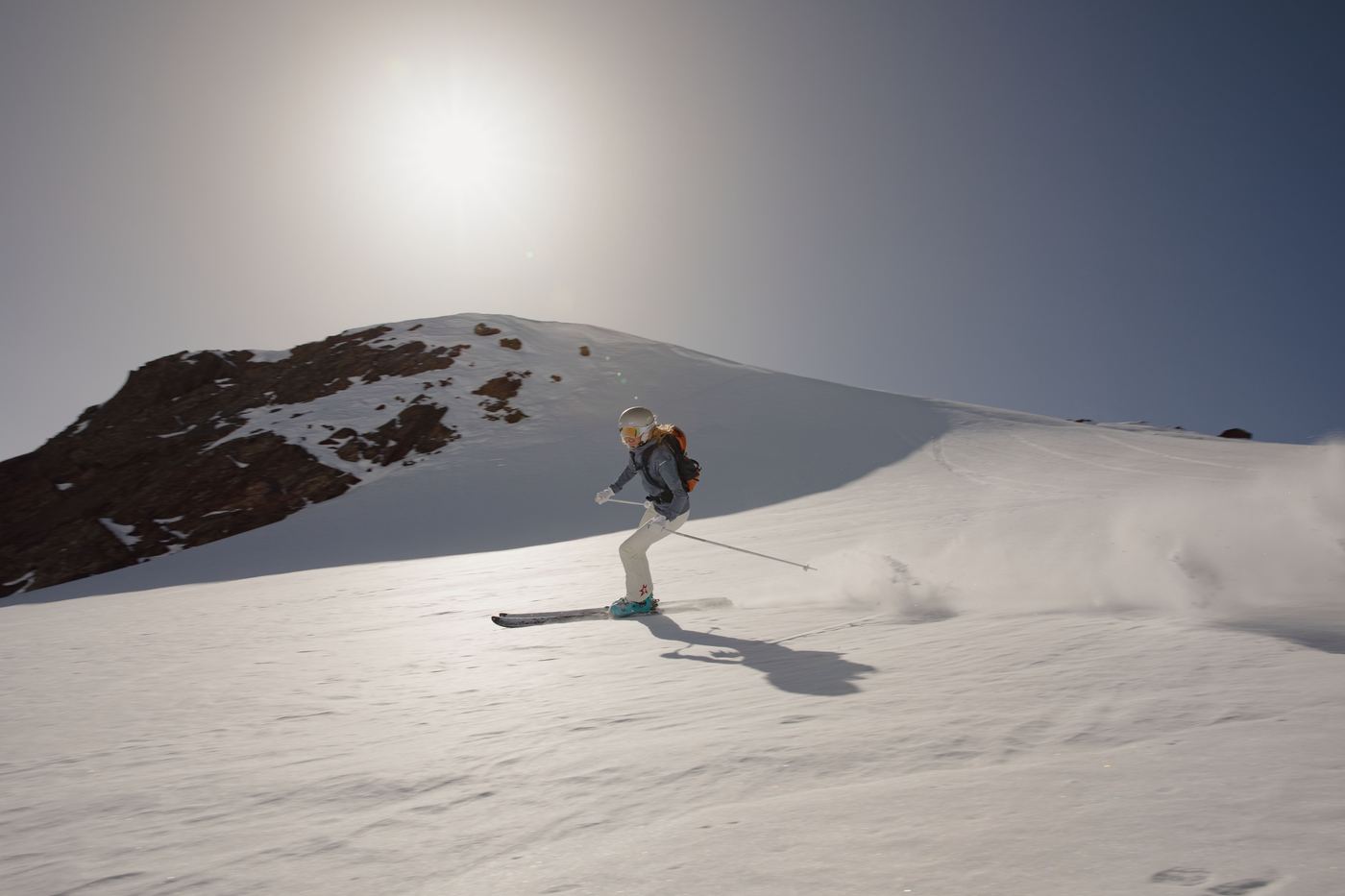
Lena’s weekend
Lena is 31, lives in Munich and owns neither a car nor any ski gear. She skied as a child but has not been for years. She wants a long February weekend on the slopes with a friend in St. Johann.
1 · Planning
What Lena experiences: She finds the hotel on the destination’s site and, somewhere else, a rental shop. Nothing tells her whether the shop has her size, what a full set costs for three days, or whether she can rent a jacket at all. After an evening on it, she is still unsure.
Why it happens: Rental shops are rarely part of destination booking platforms, and the interfaces that would show a guest the rental next to the room exist but are seldom used. Information about renting reaches the guest late, if at all. Right after booking the room, the guest has not yet decided what to pack. That is the moment to mention rental, and nobody does.
2 · Booking
What Lena experiences: She books the hotel. The sports shop’s website offers skis and boots, but no clothing. She borrows a jacket and trousers from a friend and plans to sort out the rest on arrival, since she never worked out what she could reserve.
Why it happens: Clothing rental is rarely offered online, and where it is, guests do not expect it. The half of ski rentals that are reserved in advance come from guests who know what they can reserve. The rest decide on the spot, or not at all.
3 · Packing
What Lena experiences: The borrowed clothes, a helmet and goggles she bought because she had to, boots from a friend of a friend that may or may not fit. One large bag each, for three days.
Why it happens: Every item a guest cannot rent with confidence is an item they carry. The bag is the visible cost of a rental offer nobody trusts yet, and the reason most guests take the car.
4 · Rental
What Lena experiences: Skis and boots are fitted in ten minutes, booked for three days. The borrowed jacket is too big and ten years old. The shop rents clothing too, in principle, so she asks what a jacket costs. For three days, a good part of what a new one costs in a discount store; for the week-long trip her friend is already planning, more than buying one. She keeps the borrowed jacket and decides that next time she will simply buy one.
Why it happens: A jacket has to earn around €65 a week to cover what it costs the shop to wash, dry, store and move it between rentals, and at that price a guest staying a week does better buying one. The rental price is not a margin problem; it is a handling problem. Cleaning takes a full day per item and sizes must cover the whole range. On the guest’s side the barriers are prestige, hygiene, the habit of owning, and the effort on site: fitting, waiting, not knowing whether the size is in stock. Short rentals are growing but remain an added service. Skis pay for themselves; jackets, so far, do not.
5 · Return
What Lena experiences: On Monday morning she returns the skis, signs, and is done. She had a good weekend, but she is not sure she would do it this way again.
Why it happens: The gear is cleaned and goes out again. What happens after its last season has not yet become anyone’s question. Safety items such as helmets and bindings have to be replaced when faulty; almost everything else could be repaired, sold on at season end, passed to ski clubs and schools, or taken back by manufacturers. Little of that is organized today.
Four partners, one chain
Four organizations bring this challenge, and each meets Lena at a different point in her weekend.
Tirol Werbung, the state’s tourism organization, is the reason she thought of Tirol in the first place. Its job is to inspire guests to travel as sustainably as possible, and to give destinations what they need to make that possible on the ground.
REGIO3 is the regional development team for thirteen municipalities around Kitzbühel, St. Johann and the Pillerseetal. Mobility and circular economy top its agenda, and it runs the funding program that can turn a good prototype into a regional pilot.
Tourismusverband Kitzbüheler Alpen St. Johann in Tirol is the destination she booked. It answers for whether her weekend felt easy, and its job is to bring the hotels, shops and services of the region together so that it does.
Sport Patrick runs three sports shops in St. Johann and Oberndorf. It is where Lena stood at the clothing rack, and where rental has to add up as a business.
Each partner holds one link, and none can change Lena’s packing list alone. Tirol Werbung can tell her that renting exists but cannot fit her boots. Sport Patrick can have the skis ready but cannot tell her so before she books. The destination can promise an easy weekend only if the shop delivers it, and REGIO3 can fund a pilot but not invent one. This challenge is about the chain.
Your challenge
Give Lena a different weekend. Design the one she would tell her friends about: the gear reserved with the room, nothing to pack, a jacket she is glad to wear, a return that takes a minute. Start from her and work backwards. Then make it add up for the shop that stocks the rack and the destination that promises the trip. Renting beats bringing your own only when both sides work.
Scope. Winter equipment and clothing together: jacket and trousers, skis, boots, helmets and protectors. Ski goggles are out of scope, unless you find a way around the hygiene problem: they cannot be cleaned to a standard that rules out eye infections, so today they are bought, not rented.
Make it work this season. The best idea is one the shop and the destination could start testing in a few weeks. Online ski reservation, the destination’s booking platform, the shop’s workflow and booking interfaces waiting to be switched on are all there to be used. Build on them before you build beside them.
Five pathways
Focus on one or combine several.
|
1. Right after she books The decision about what to bring is still open in the minutes after the room is confirmed, and that moment passes unused. What does Lena see then, who sends it, and how does it stand out from a confirmation nobody reads? It takes the hotels, who send that confirmation; the destination, which gives them something worth saying; and Tirol Werbung, which makes renting part of how Tirol is promised. |
2. One reservation, not a second website What does Lena see when room and gear are one offer? Who sells it, who takes the money, and what has to be true for the shop and the destination to make that happen? It takes the destination’s booking platform, the shop’s reservation system, and the hotels that sit between them. |
|
3. A jacket she wants to wear Is the real barrier hygiene, fit, style, price or habit? What makes a rental jacket her first choice rather than her fallback? Helmets and boots are the items guests least like to borrow: design around that, or design it away? It takes the shop above all, and the brands and cleaning partners behind its rack. |
4. Make it add up Short rentals are growing; week-long rentals do not pay. Which mix of price, volume, cooperation and shared costs turns clothing rental from a service into a business? It takes the shop’s numbers, the destination’s volume, and whatever the region can put in to carry the first season. |
|
5. After the last rental Rental becomes circular when gear is repaired, passed on or recycled rather than discarded. What should happen to a jacket, a helmet or a pair of skis at the end of its rental life, and who pays for it? It takes the shop, the manufacturers who take gear back, and the ski clubs, schools and second-hand channels of the region. |
|
What we’re looking for. Concrete, testable proposals you can walk us through from booking to return: a service blueprint, a landing page or app mockup, a short video of the journey, a pricing model with the shop’s numbers in it. Show how it works with the systems already in place, say who has to do what, and say how you would know it worked: rental reservations, clicks on the offer, guests arriving with hand luggage.
The prize
The winning team will receive a surprise from Tirol: 5 × €30 Genuss vouchers for Moments Tirol. “Bread soup, Breatle or Marend”: everything on your plate comes from Tirol. It’s good for the region and simply tastes great.
Part of the Circular Jacket Challenge, 26–27 November 2026 — a two-day Innovation Sprint under the Interreg Alpine Space project ASTER, powered by InnoDays.