

The Last Jacket
Circular Jacket Challenge · Challenge partner: GammaO (FR)
How might we make a jacket more valuable to its wearer in year twenty than in year one — and never let it become waste?
The jacket is built, tested and manufacturable. What is missing is everything around it — how it is sold, serviced, upgraded, passed on and lived with over twenty or thirty years. Inventing that system is the work.
A jacket that is already built
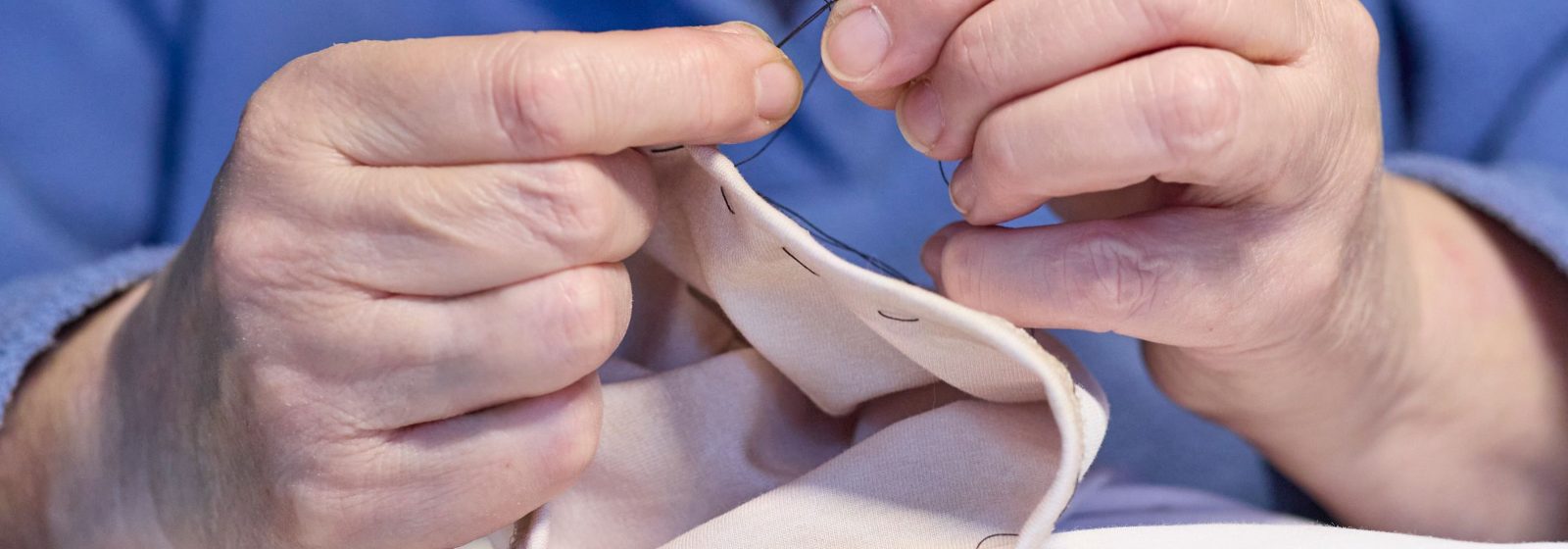
GammaO is a French textile R&D company in Le Pouzin, Ardèche, working on circular garment design and triboelectric textiles. Their Uppik jacket is a mono-material winter jacket made from 100% polyester with no sewing and no glue: components are ultrasonically heat-bonded and can be released again by reheating, so the garment can be taken apart, repaired part by part, and recycled as one material.
An NFC tag links each jacket to an ERP record tracing every component from yarn to finish. Piezoelectric fabric electrodes power LED lighting from body movement, without batteries. GammaO works with TopTex Cube on garment engineering, Chamatex on mono-material fabrics and SlamFlow on traceability.
The problem: a promise the market is not ready for
The technical work is done. The jacket performs in alpine conditions, and it can be repaired and recycled. What remains is harder.
It sells for €450–700, because the price carries more than a garment: traceability, a repair programme, personalisation, take-back. None of that is visible in the moment someone decides, and that moment is short. The deeper gap opens after it: a jacket designed to last twenty or thirty years needs something to carry the relationship across those decades — service, upgrades, a reason to come back — and for technical garments that barely exists. Outdoor gear is bought on seasonal cycles, replaced rather than repaired, and “buy once” reads as restriction rather than reward.
The gap is not one of belief. Customers agree that long-lasting products are better. They still buy the new thing.
Why this is hard: the twenty-year problem
A lifelong jacket makes a promise that has to survive decades of reality. Colours fade. Exact materials go out of production. Suppliers change. In fifteen years a torn panel may be unrepairable in its original form — and a repair that visibly does not match feels like a downgrade, not a service.
GammaO’s instinct is to turn that around: treat repair, redesign and personalisation as moments where the jacket gains value instead of losing it, so it evolves with its wearer. That reframes the question — not “how do we keep this jacket functional for twenty years?” but “how do we make someone more attached to it in year twenty than in year one?”
What we are looking for
Design the system around the jacket, not the jacket. The product is fixed. What is open is the experience of living with it: repair and upgrade pathways, personalisation, the Digital Product Passport, community, resale and refurbishment, and the business models that make them work.
Think in decades, not seasons. A proposal that works at the point of sale but says nothing about year eight or year twenty is half an answer.
Make it tangible. A service blueprint, a campaign concept, a pricing structure, a digital product mockup, a retail moment you can walk us through. And test the promise: “this is the last jacket you will need to buy” is the current framing, not a fixed constraint. If you find a stronger one — or a reason it does not work, including whether buying is the right model at all — say so.

Find your angle
|
The buyer Seconds to decide, €550 at stake. What do they need to see, touch or understand to say yes, with a €200 jacket standing next to it? And is the answer the same for an alpine practitioner, an eco-conscious urban buyer and an institutional buyer like a rescue service? |
The wearer in year eight A faded panel and a torn cuff. What does the repair, upgrade or personalisation moment look like, and how does it leave them more attached than before? And what role does the Digital Product Passport play — compliance record, service history, provenance story? |
|
The second wearer The jacket changes hands in year twelve. What makes resale or refurbishment work for a mono-material garment with component-level traceability — and what does GammaO capture from it? |
The brand and the shop floor A retailer has limited shelf space and staff who cannot deliver a ten-minute explanation. And the brand needs a model where selling fewer jackets works: stock planning, warranties, revenue over time, what holds a community together between purchases. |
The prize
The winning team receives an Uppik multifunctional neck warmer for each team member (retail value €45), plus official recognition on GammaO’s website and communication channels, credited for its contribution to the Circular Jacket Challenge.
Part of the Circular Jacket Challenge, 26–27 November 2026 — a two-day Innovation Sprint under the Interreg Alpine Space project ASTER, powered by InnoDays.